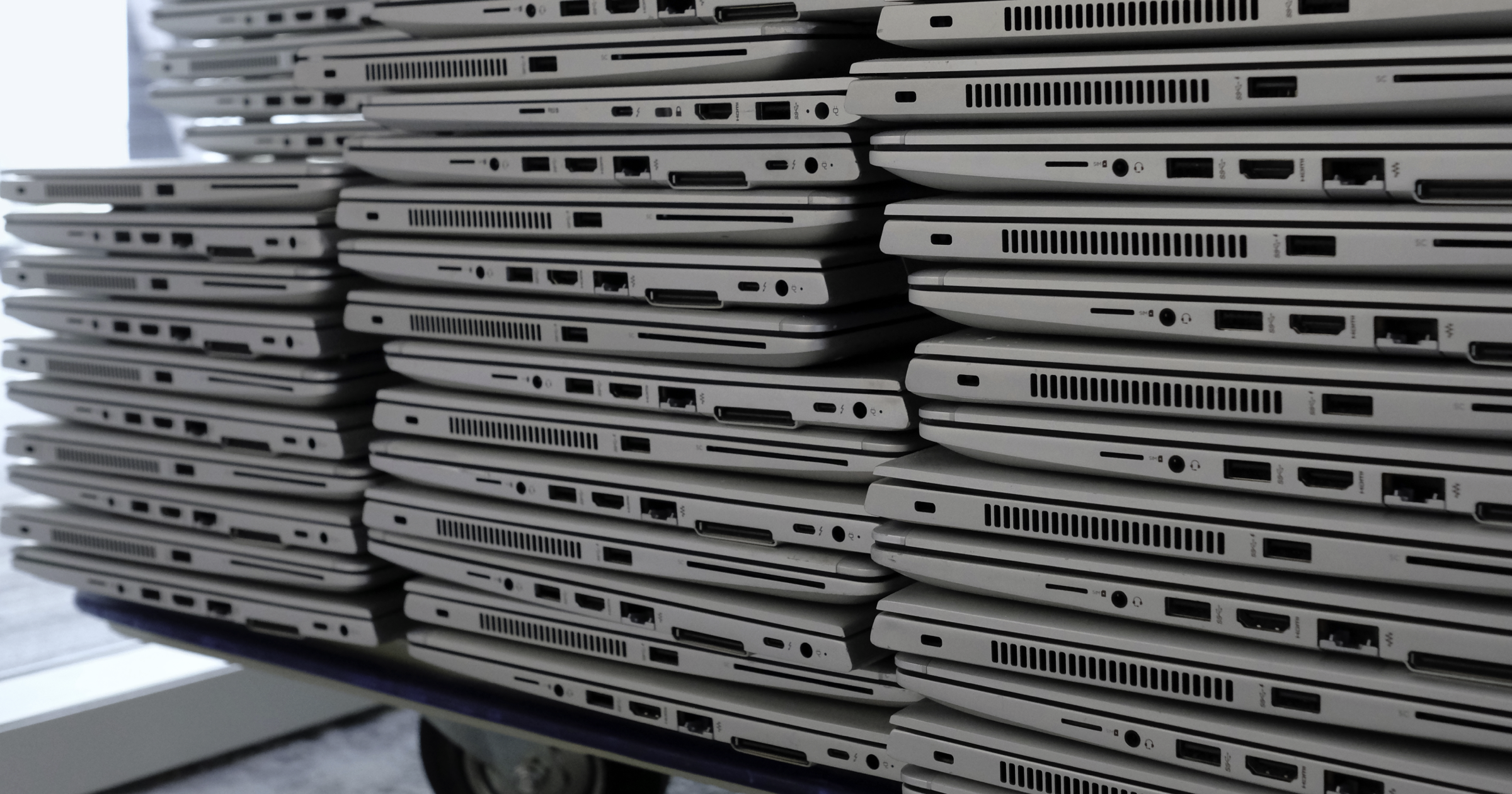
Hospitals retire endpoints, servers, storage, and network equipment constantly. The risk is not the retirement itself. The risk is what happens when devices move without custody controls, sanitization standards, and proof artifacts that survive compliance review. This guide outlines a practical program hospitals can run repeatedly.
Why hospitals cannot “wing it” with retired devices
Even a small batch of retired devices can represent a meaningful exposure if protected health information (PHI) or credentials remain accessible. Hospital disposal programs must be built to support audits and investigations, not just operations.
HIPAA’s Security Rule includes requirements for policies and procedures for the final disposition of electronic PHI and the hardware or media on which it is stored. A commonly referenced HHS resource on disposal is here: HHS Disposal FAQs (PDF).
The hospital ITAD program model
A strong hospital ITAD program is designed to achieve three outcomes at the same time:
- Reduce breach exposure: ensure PHI and credential risk is eliminated or controlled
- Support audits: provide documentation that proves what occurred
- Maintain continuity: avoid disrupting clinical operations during refresh and decommissioning
Define your scope and risk tiers
Hospitals should tier assets by risk so the sanitization method and custody controls match reality. Common tiers include:
- Tier 1: servers, storage, backup media, systems that directly store ePHI
- Tier 2: endpoints that access ePHI (workstations, laptops, VDI endpoints)
- Tier 3: devices that may store logs or credentials (networking gear, printers, copiers)
- Tier 4: peripherals and non-data-bearing components (monitors, docks, cables) after validation
Use a sanitization framework that is defensible
Many healthcare organizations align their media sanitization decisions to NIST SP 800-88 concepts because it provides structured guidance for method selection and documentation. Reference: NIST SP 800-88 Rev. 1 (PDF).
Practical mapping for hospitals
- Endpoints: validated erasure with verification logs and exception routing
- Servers and storage: higher assurance methods, often including physical destruction for failures or high-risk tiers
- Network and office equipment: document capability limitations and apply compensating controls when a device only supports basic reset
Chain of custody: the audit trail starts before sanitization
If a device leaves a department and disappears into an uncontrolled process, the certificate at the end becomes less meaningful. A hospital-grade custody process includes:
- department release authorization with date and approver
- secure containers or locked carts for internal moves
- sealed totes or pallet wrap for outbound transport
- documented custody handoffs at every transfer point
- controlled storage prior to processing
Onsite vs offsite destruction: how to choose
Hospitals often choose onsite destruction when they require witness capability or want to reduce transport exposure for high-risk tiers. Offsite destruction can still be compliant when custody and documentation are strong, and when the sanitization standard is consistently applied and verified.
A useful decision model:
- Choose onsite when risk tier is highest, witness requirement exists, or assets cannot leave the facility before destruction
- Choose offsite when logistics require centralized processing, custody controls are robust, and proof artifacts are comprehensive
The hospital ITAD checklist (audit-ready)
1) Pre-project planning
- Confirm governance: IT security, compliance, and supply chain roles
- Define risk tiers and acceptable sanitization levels
- Define custody controls and storage requirements
- Define exception handling and destruction fallback for failures
- Confirm what documentation compliance expects in closeout
2) Intake and inventory controls
- Capture asset tag and serial where feasible
- Record department and location
- Record media type (SSD, HDD, tape, embedded)
- Reconcile received counts to released counts
3) Sanitization or destruction execution
- Apply approved method by device and media class
- Log pass or fail outcomes
- Quarantine failures and route to destruction when required
- Document remediation steps for exceptions
4) Closeout documentation package
A hospital-ready closeout packet should include:
- inventory reconciliation report
- certificate(s) of sanitization or destruction
- method summary statement
- exceptions report and remediation outcomes
- final disposition report (remarket, recycle, destroy)
What a certificate should include
Certificates should be specific enough to connect outcomes to the inventory:
- unique certificate ID and date
- method used (logical, cryptographic, physical)
- asset identifiers (serial, tag, drive identifier) when available
- attestation and responsible party
- reference to the organization’s policy or standard
Internal link suggestions for Tech Reboot: Healthcare ITAD, Data Destruction, Server Decommissioning, Request a Quote.
FAQs
What does HIPAA require for disposal of devices that contained ePHI?
HIPAA’s Security Rule requires policies and procedures for final disposition of ePHI and the hardware or media on which it is stored, along with appropriate safeguards so ePHI is not accessible to unauthorized persons.
Is a certificate of destruction enough for compliance?
A certificate is important, but stronger proof includes chain of custody, inventory reconciliation, documented methods, verification outcomes, and an exceptions report that shows how failures were handled.
Should hospitals always destroy drives physically?
Not always. Many organizations use a risk-tier approach: verified erasure for lower tiers, and physical destruction for higher tiers or for failures. The key is consistent policy and documentation.
How should we handle devices that vendors maintain or lease?
Require documented sanitization outcomes and return workflows that match your policy. Ensure the closeout package still reconciles what left your control and how it was processed.
What are the most common weaknesses in hospital ITAD programs?
Weak custody controls, inconsistent sanitization standards, missing verification evidence, and incomplete reconciliation are the most common issues flagged internally.
What assets are often missed in hospital disposal planning?
Printers, copiers, certain network equipment, and specialty devices can store logs or data. Tier them properly and document capability limitations.